
Intergovernmental Relations

Official text (opens in a new tab)

6 statements

Christine Normandin, Saint-Jean

Bloc Québécois

Linked statement

“Canada and the European Union are working on deals about energy, culture, minerals, and other areas that belong to Quebec. The federal government does not have the power to make these promises on its own. Will the government give Quebec a direct seat at the negotiating table?”
Official Hansard

Mr. Speaker, Canada and the European Union have announced initiatives that may, or may not, lead to associate membership status. They discussed critical minerals, energy, regulatory alignment in trade, cultural exchanges, wildfire management and much more. All these areas fall under Quebec’s jurisdiction. Not only does the federal government lack the constitutional authority to act in these areas, but it will also be unable to fulfill its commitments without Quebec’s support. Moving forward, will the federal government ensure that Quebec has a direct seat at the negotiating table?
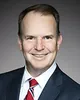

Steven MacKinnon, Minister of Transport and Leader of the Government in the House of Commons

Liberal
“Quebeckers and all Canadians should be proud of our closer ties with Europe. Working more with Europe helps us trade with more partners and rely less on the United States. This will help both Quebec and Canada.”
Official Hansard

Mr. Speaker, Quebeckers, like all Canadians, are very proud that we are moving forward toward a much more structured and much deeper relationship and, yes, toward diversifying our trade beyond our dependence on the United States. I believe that Quebeckers can look forward to a much more promising and prosperous future in which we collaborate with our European counterparts in a wide range of areas. This is good for Quebec, and it is good for Canada.

Christine Normandin, Saint-Jean

Bloc Québécois
“The government is negotiating a big deal with Europe about areas it does not control. It did not ask Quebec, the public, or Parliament about it. I want a debate in the House on this deal this week.”
Official Hansard

Mr. Speaker, the federal government is discussing a potentially major agreement with Europe that would cover areas where it has no jurisdiction. The government never asked Quebec for its opinion, the Liberals never consulted the public in an election, and there was never a debate in Parliament. Everything is happening behind the Prime Minister’s closed doors. This matter is important enough to warrant at least basic transparency. Will the government convene a debate in the House this week?

Steven MacKinnon, Minister of Transport and Leader of the Government in the House of Commons

Liberal
“We are being open about our talks with the European Union. We started them in public in Montreal with many groups, including six former Quebec premiers. We will keep being fully open as we finish these deals.”
Official Hansard

Mr. Speaker, it is hard to be more transparent than holding a meeting in Montreal in front of all stakeholders, including six former premiers of the province of Quebec. We are obviously delighted to have Quebec and society as a whole involved in the talks. The discussions began in Montreal, and they will of course continue. We will continue to be totally transparent as we sign very promising agreements with the European Union.

Alexis Brunelle-Duceppe, Lac-Saint-Jean

Bloc Québécois
“The government should not leave Quebec out of talks with Europe. Allowing Quebec to represent itself internationally works. It helped Quebec join international groups, make a carbon deal with California, and join trade talks with Europe. I want the government to officially recognize Quebec's right to speak for itself internationally.”
Official Hansard

Mr. Speaker, excluding Quebec from the discussions with Europe is not the right approach. The Prime Minister said that he recognizes doctrines that work. Well, the Gérin‑Lajoie doctrine works. That is how Quebec got its own seat at the Organisation internationale de la Francophonie. It is how Quebec was able to negotiate a carbon market with California. It is how Quebec got a seat at the table for the negotiations leading to the free trade agreement with Europe. Since it works, will the Government of Canada officially recognize the Gérin‑Lajoie doctrine today?

Steven MacKinnon, Minister of Transport and Leader of the Government in the House of Commons

Liberal
“We will keep talking with Quebec and all the provinces about issues they control, such as jobs, training, and labour.”
Official Hansard

Mr. Speaker, we will of course continue to consult Quebec and all the provinces on matters within their areas of jurisdiction, including workforce training, portability, procurement and all things labour. We will certainly continue to initiate and pursue discussions with all the provinces on matters that fall within their jurisdiction and capabilities.

Discussion

No comments yet

See the full discussion

Comment rules

More from sitting 160

  1. Private Members' Business Income Tax Act 7 statements
  2. Government Orders Business of Supply 51 statements
  3. Oral Questions Taxation 12 statements
  4. Oral Questions Intergovernmental Relations 6 statements
  5. Oral Questions Taxation 12 statements
  6. Oral Questions The Economy 2 statements
  7. Oral Questions Justice 10 statements
  8. Oral Questions Employment Insurance 2 statements
  9. Oral Questions Health 4 statements
  10. Oral Questions International Trade 14 statements
  11. Oral Questions Health 2 statements
  12. Oral Questions Public Services and Procurement 7 statements
  13. Oral Questions Health 2 statements
  14. Oral Questions Labour 2 statements
  15. Oral Questions Veterans Affairs 2 statements
  16. Government Orders Business of Supply 93 statements
  17. Adjournment Proceedings Adjournment Proceedings 4 statements
  18. Adjournment Proceedings Adjournment Proceedings 4 statements
  19. Adjournment Proceedings Adjournment Proceedings 4 statements
  20. Oral Questions The Environment 4 statements